

5 Lessons For Service Leavers Transitioning Into The Security Industry:
For the second edition in the Risk to Readiness series, we sit down former Service Member and founder of The Ops Con, Fraser Coleman. Having served for more than a decade in the Royal Regiment of Scotland and the Irish Guards where he completed two operational tours of Afghanistan Fraser transitioned away from service life and into “civvy street”.
Consolidating upon the challenges and lessons faced by many service leavers he founded The Ops Con. A platform engineered by veterans to support those walking the path out of uniform and navigate the competitive worlds of Close Protection (CP) and Private Security.
Utilizing his own experiences Fraser sets out five ways that service leavers can prepare for the transition away from the military and emergency services and into close protection and the wider security industry.
“I left the military in 2014 and I hit a lot of the traps and pitfalls of transition myself. I don't think transition should be as difficult as it is. That isn't a criticism of any one thing. It's just that a lot of people come out without a clear picture of what's in front of them, and some of that can be put right with a bit of preparation and the right people around you.
Security is a natural move for a lot of service leavers. The skills translate, and there's an abundance of work out there, from low level right up to very high level, almost anywhere in the world. But getting into it well takes some groundwork. These are the five things I'd want anyone leaving to think about.”
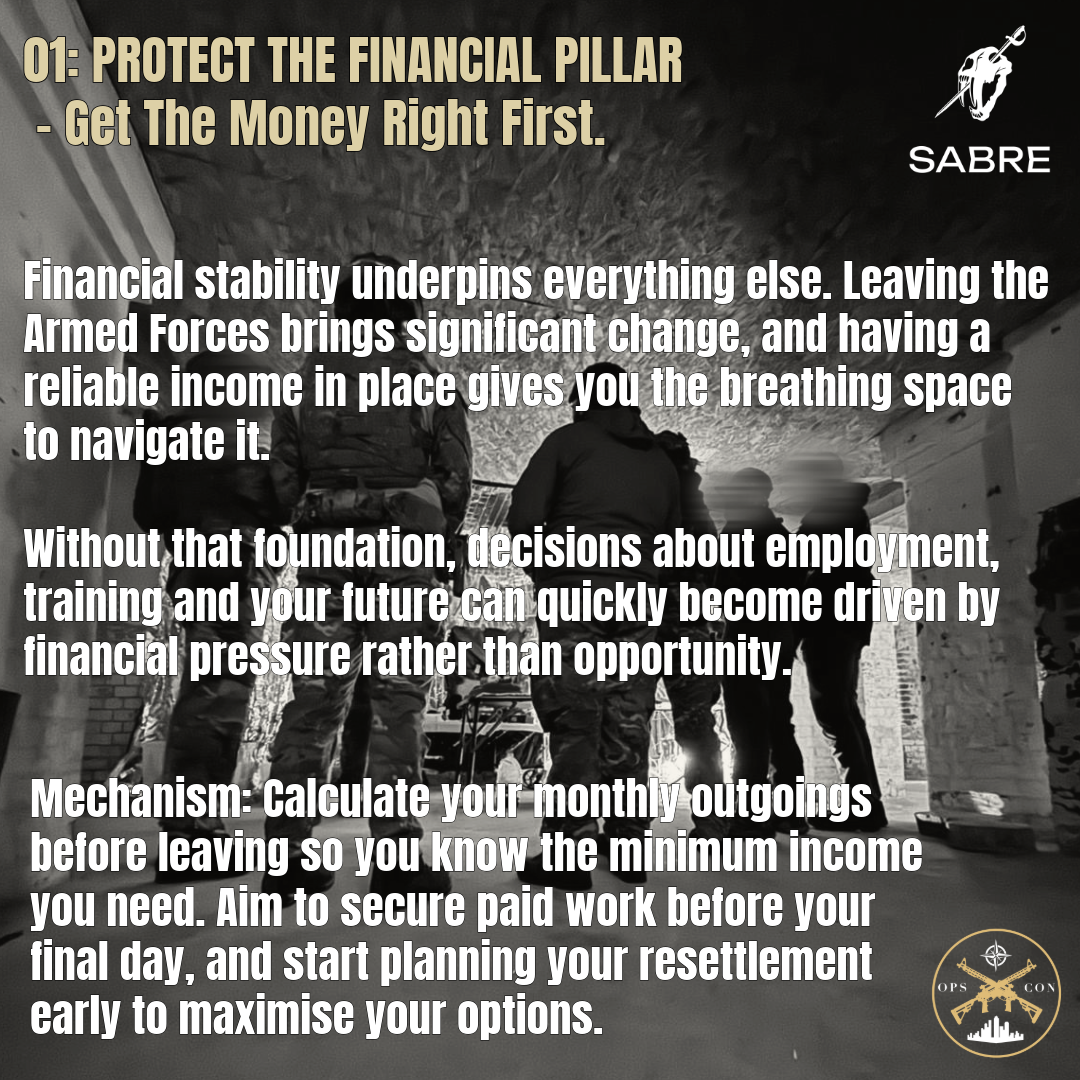
1. Protect the Financial Pillar – Get the Money Right First.
This is the one I believe in most. If the financial pillar falls, most other things fall with it.
When you leave, a lot changes at once. The one thing you can get in front of early is money coming in at the end of the month to pay the bills. If that's in place, you've got room to deal with everything else. If it isn't, every other decision gets made under pressure.
Mechanism: Before you leave, sit down and work out your actual monthly outgoings, so you know the number you need to cover. Aim to have paid work lined up before your last day, even if it isn't the job you'll end up doing long term. And start early in your resettlement. The sooner you start, the more options you'll have.
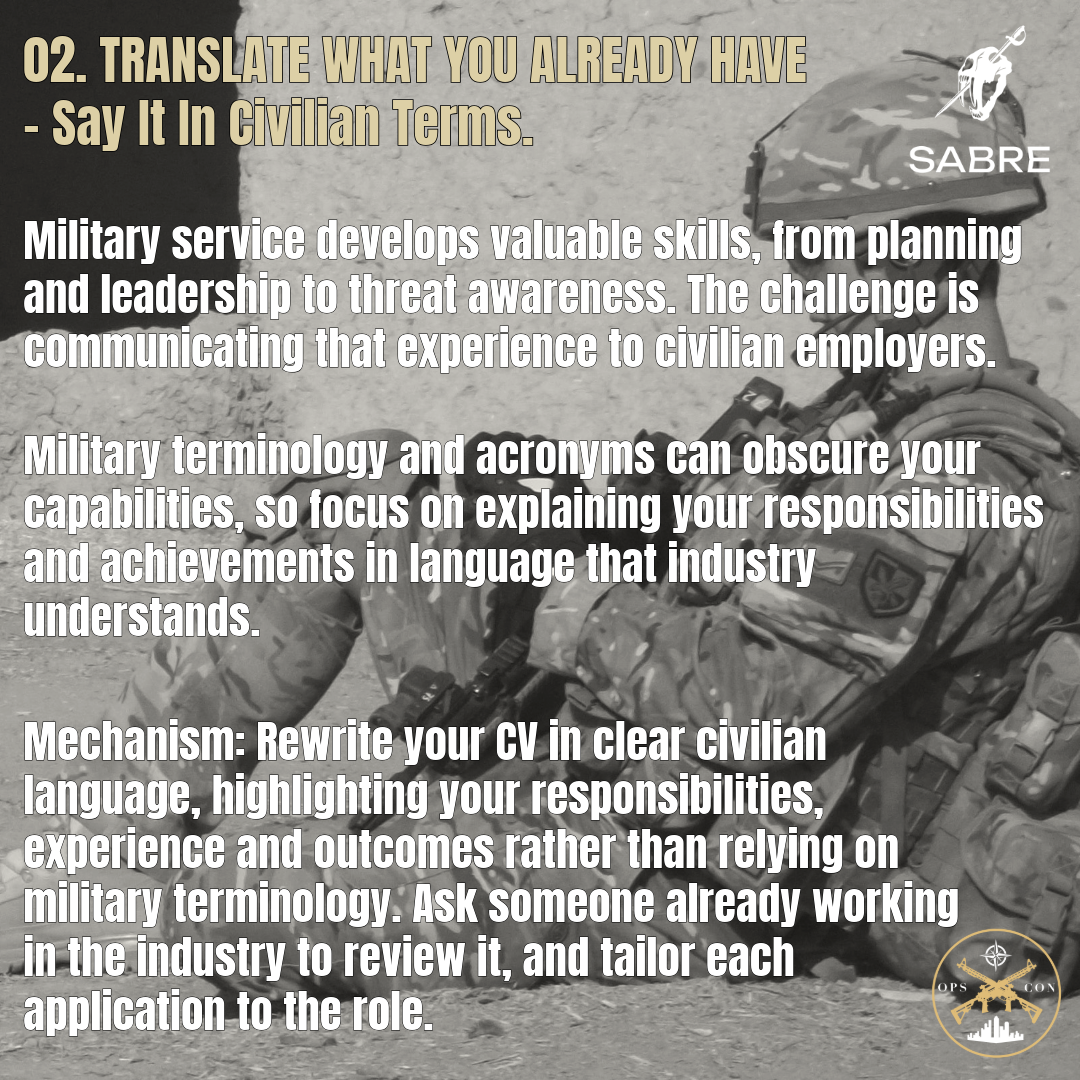
2. Translate What You Already Have – Say It in Civilian Terms.
Most people leaving the forces have more to offer this industry than they realise. Planning, briefing, discipline, threat awareness, and working as part of a team when things are under pressure. Those are the things clients and employers in security are looking for.
The problem is usually the language. Military CVs are full of terms and abbreviations that mean everything to you and nothing to a civilian recruiter or client. If they can't follow it, they won't see what you can do.
You don't need to oversell yourself. You just need to describe what you did in a way someone outside the military can understand and picture. It's also worth thinking about the type of work you're going for. A CV for a residential security role should read differently to one for a corporate close protection team, so tailor it each time.
Mechanism: Rewrite your CV in plain civilian language. Take out the acronyms and explain what you were responsible for, who you worked with and what came of it. Then get someone who's already working in the industry to read it. They'll tell you quickly what lands and what doesn't.
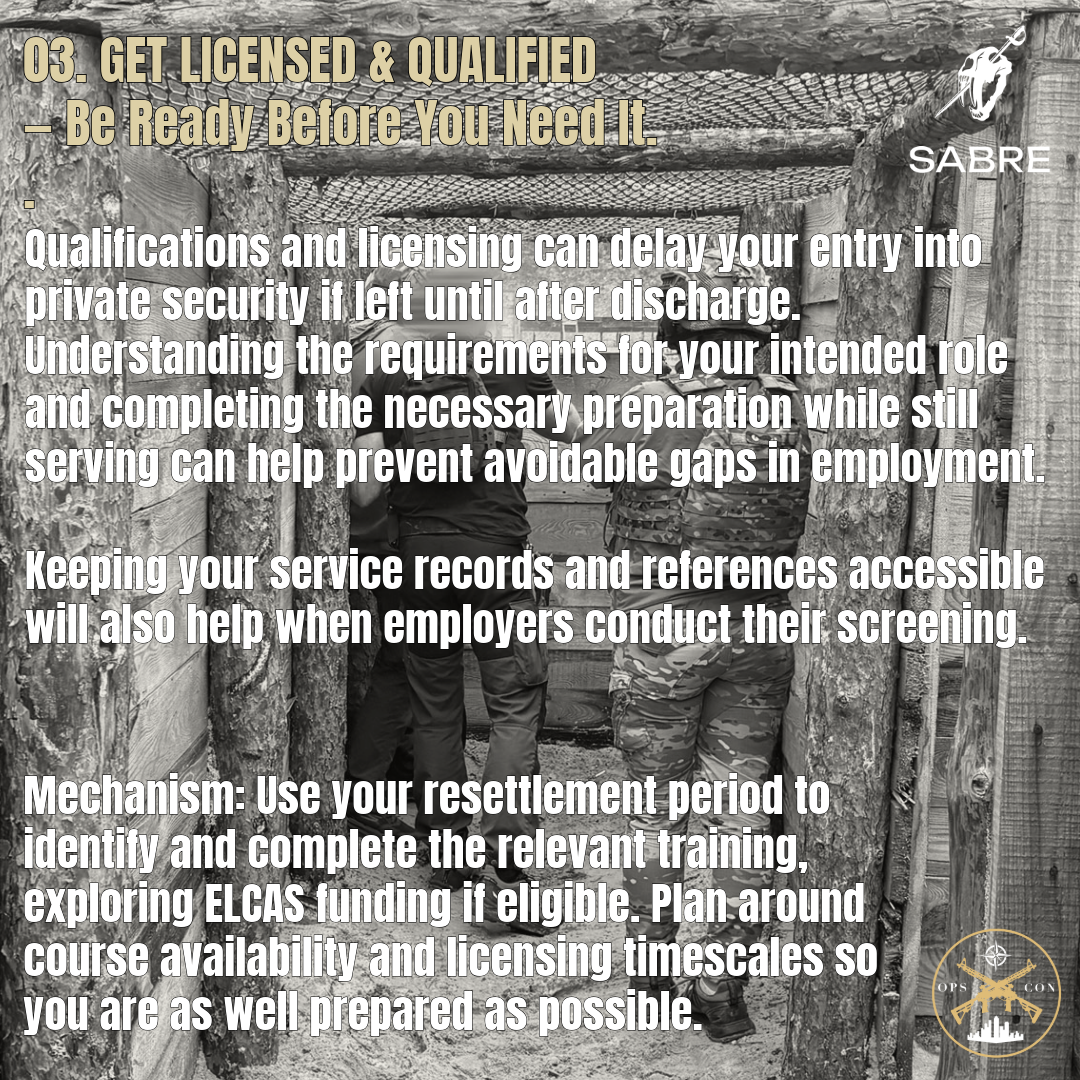
3. Get Licensed and Qualified – Have It in Hand Before You Need It.
In the UK, you can't work in close protection without an SIA Close Protection licence. To get one, you need the Level 3 Close Protection qualification and a recognised first aid qualification, and the SIA carries out its own checks before it issues the licence.
None of that happens overnight. If you leave first and then start the process, you can spend weeks or months unable to take work that's there for you. That's exactly the gap that puts pressure on the financial pillar.
The same goes if you're looking at the wider security industry. Different roles need different SIA licences, so it's worth knowing which ones apply to the work you're aiming for. Employers will usually screen you as well, which normally means going back over your work history, so keep your service records and references somewhere you can find them.
Mechanism: Use your resettlement time and funding to get qualified while you're still serving. Look at ELCAS if you're eligible, and plan it so you've got the licence in hand on your first day out, not three months later.
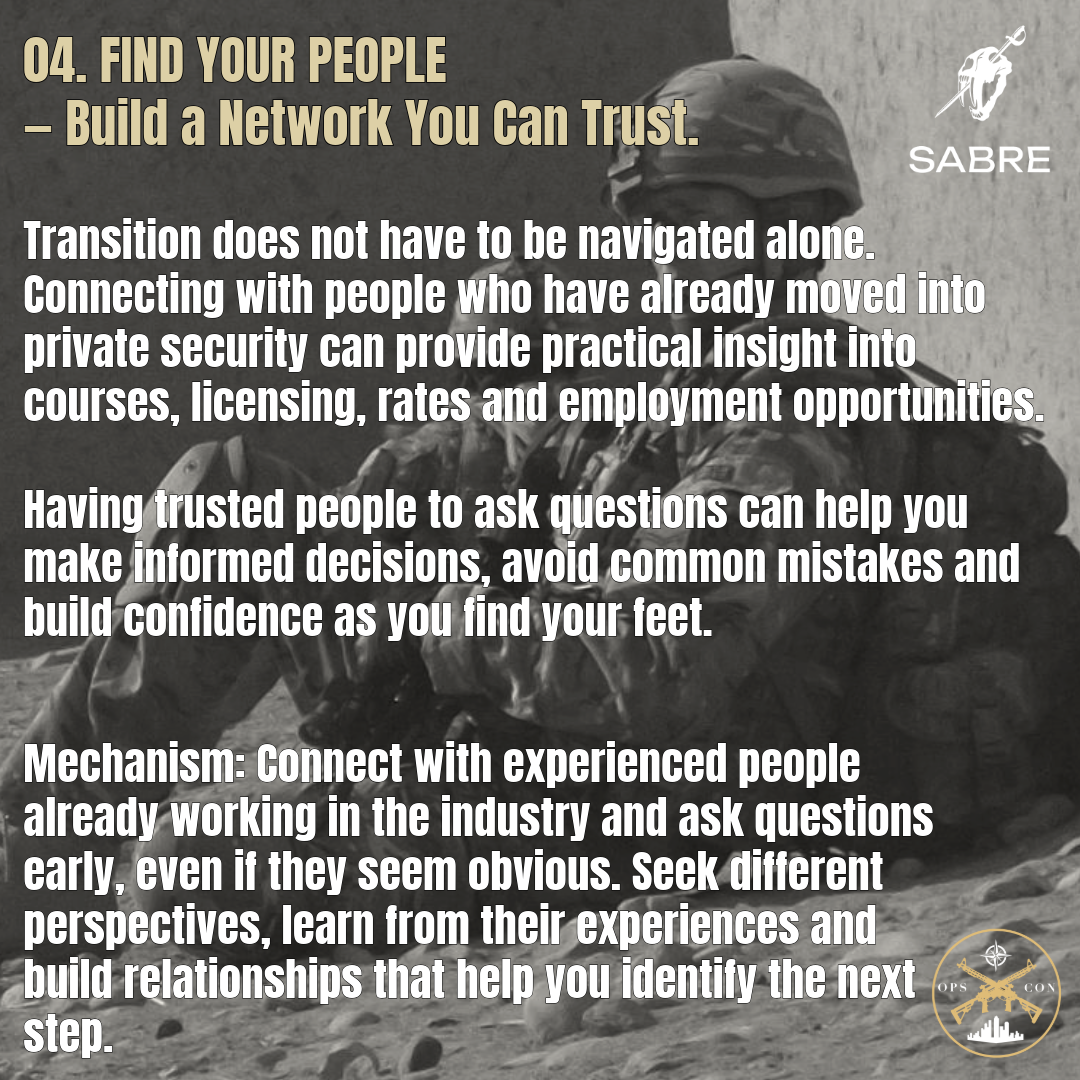
4. Find Your People – Like-Minded People You Can Trust.
What I took from my own transition is that most people don't need a big programme. What they need is like-minded people they can relate to and have a basic level of trust in, who'll answer questions as and when they come up.
Transition throws up questions all the time. Which course, which licence, what a day rate looks like, whether a job is worth taking, who to speak to. Having someone you can just ask makes a big difference. It means you can take things one step at a time, build your own confidence and then go your own way.
A lot of people try to work it all out on their own because that's what they're used to. You don't have to.
Mechanism: Join a community of people who've already made the move into security and close protection. Ask your questions early, even the ones you think are obvious. And take it one step at a time. You don't need the whole plan on day one, just the next step.
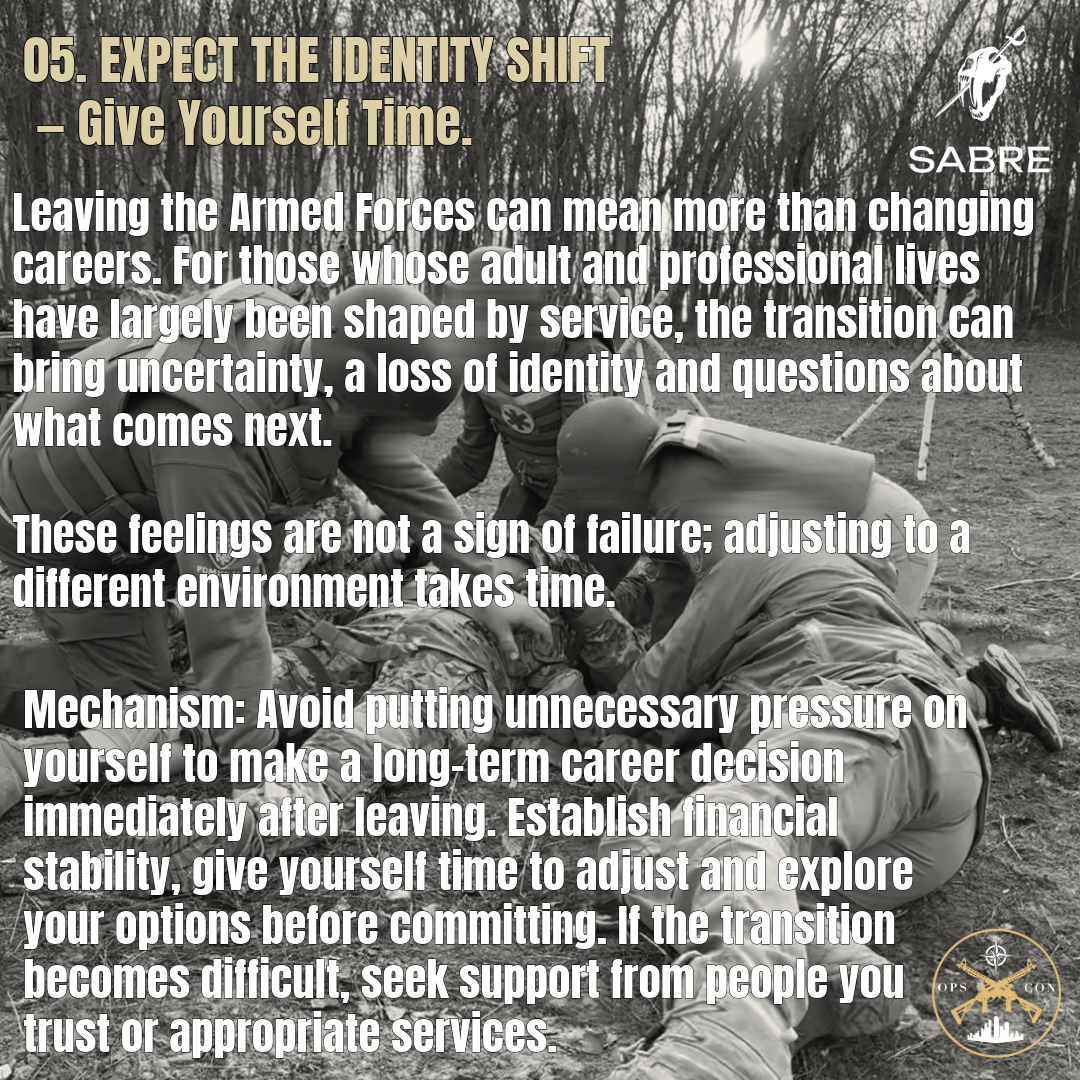
5. Expect the Identity Shift – Buy Yourself Time.
This is the one people talk about least. Leaving service can bring a loss of identity, ego death, anxiety, insecurity and the unknown. Many people joined at a young age, and the service is the only professional life they've had.
That's normal. It doesn't mean you've made the wrong move or that you're not coping. It's part of leaving something that's been a big part of who you are.
This is where the first point comes back in. When you protect your income, you buy yourself time. Time to work out what you actually want to do next and what you enjoy outside of uniform. Without that time, people often grab the first thing that comes along and end up somewhere that doesn't suit them.
Mechanism: Don't make the big long-term career decision in your first few months out. Let the income settle first. Once the bills are covered and you've found your feet, you'll be in a much better position to decide what comes next.
Conclusion:
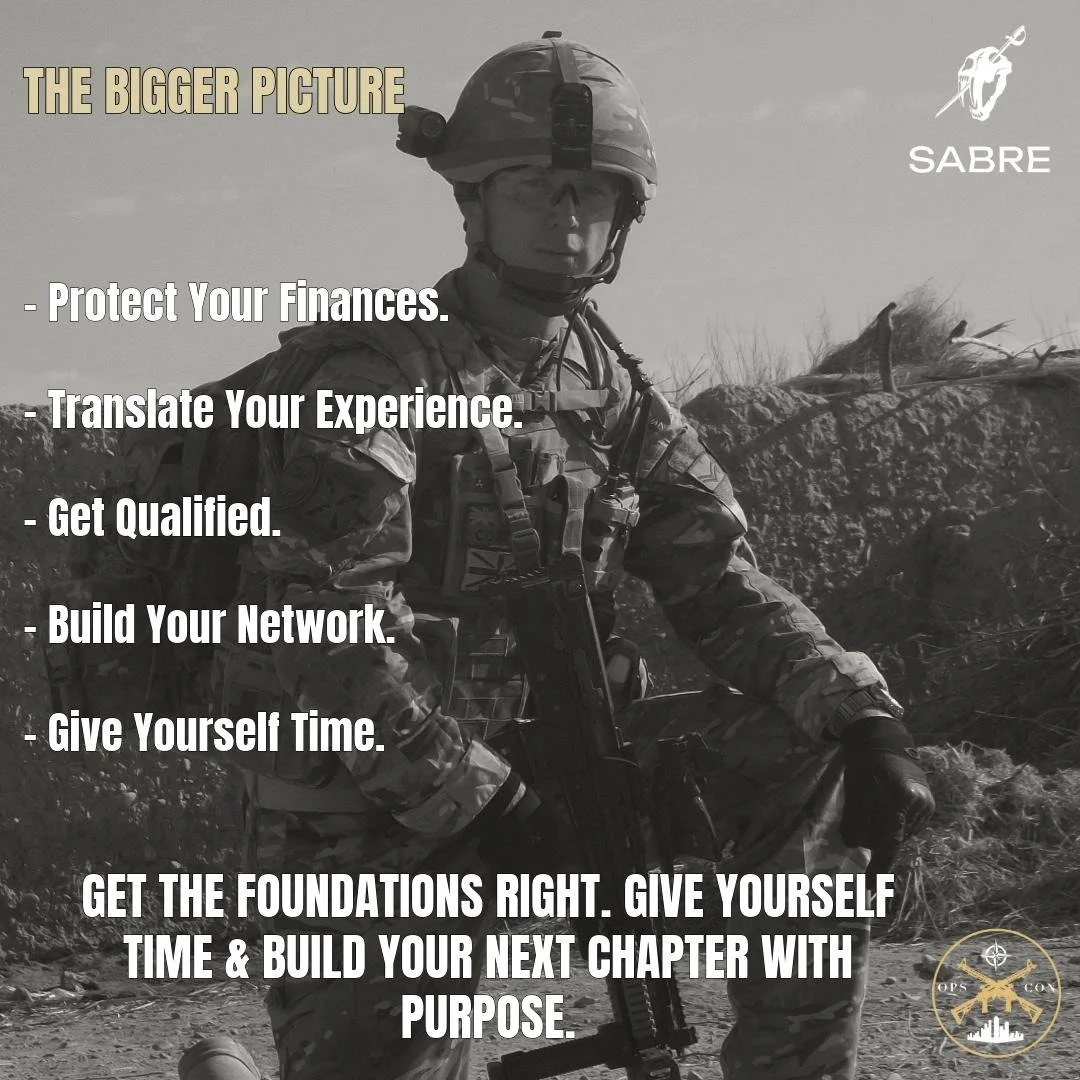
None of this needs to be complicated. Get the money right first, make sure people can understand what you bring, have your licence and qualifications sorted before you need them, find people you trust to ask questions, and give yourself time to adjust.
The way I'd put it is this: food on the table, roof over your head, and everything else comes in time. Get those basics in place and you've got the space to build the rest of your career at your own pace.
Fraser Coleman left the military in 2014 and founded The Ops Con to help service leavers and Blue Light personnel move into the private security and close protection industry.
To find out more about the opportunities available to Service Leavers via the Ops Con please visit their website. - https://theopscon.com/